


SFHA
Image
Services
Charity Marketing
Information Architecture
Discovery Phase
User research
Website design & UI
Drupal 10 Website
Website hosting & support
Charity Web Design
Industry
Charity
Membership organisations
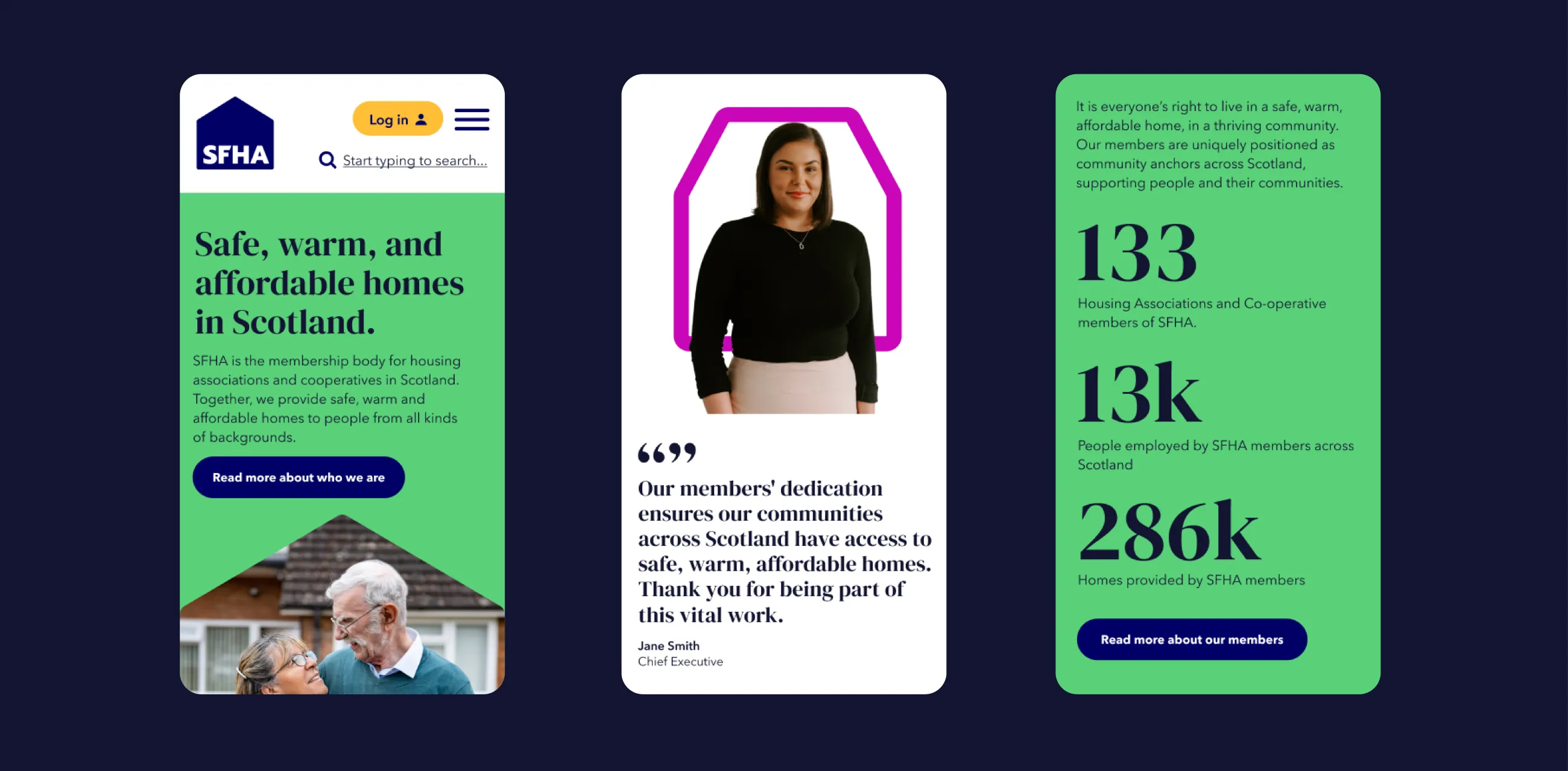
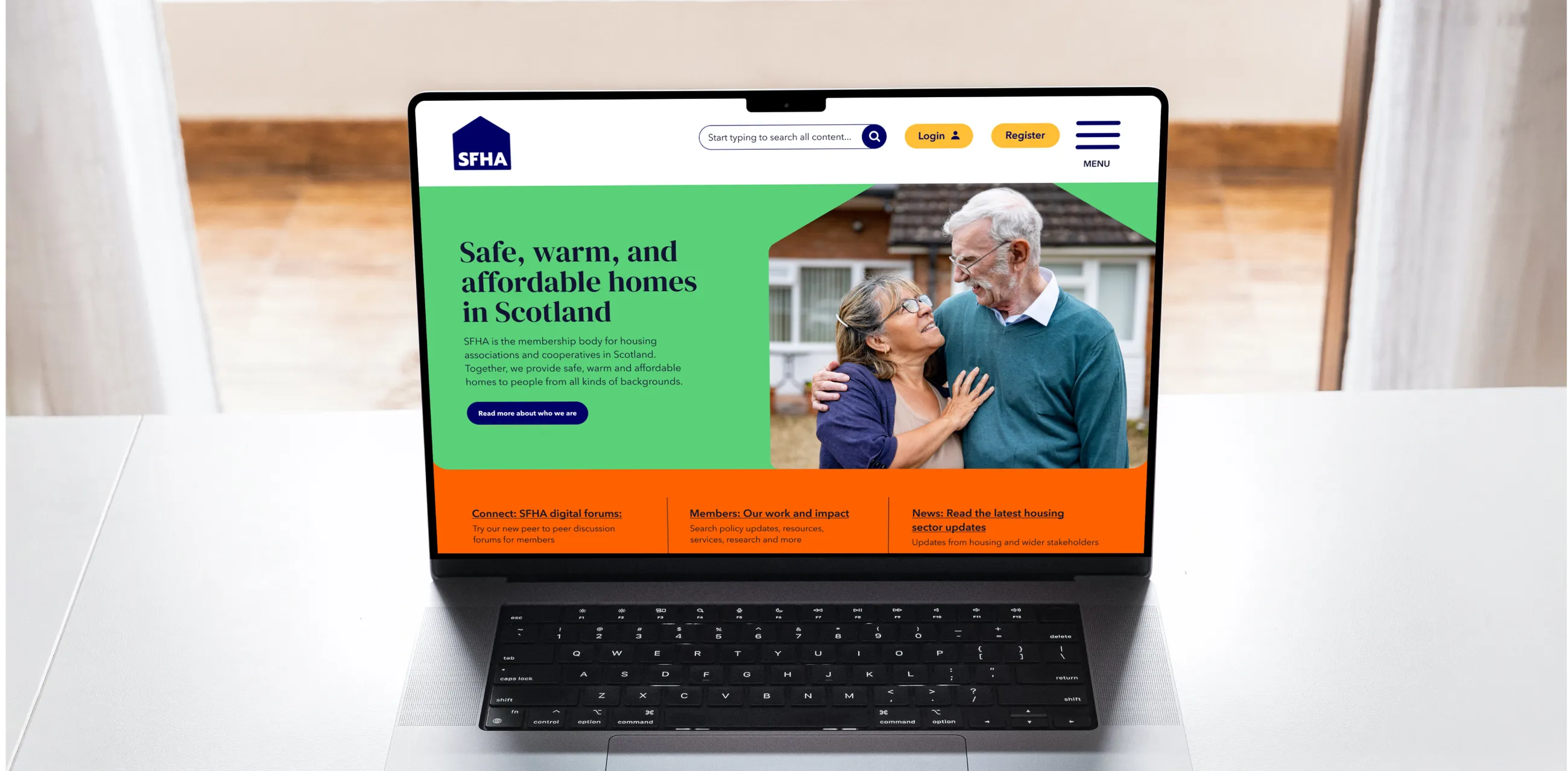
Following a successful brand refresh, the Scottish Federation of Housing Associations needed a digital presence that could match their renewed identity and better serve Scotland's social housing sector. Their existing website, built in 2016, had reached the end of its useful lifespan. A bespoke CMS was creating security risks, members struggled to find information quickly, and the events booking process was frustrating users. IE Digital was commissioned to design and build a modern, member-focused website on Drupal that would transform how SFHA connects with and supports over 130 housing associations and co-operatives across Scotland.
Image
Video file
Video file
Listen
Understanding member frustrations
SFHA's previous website, built in 2015-2016, had grown over seven years into a sprawling resource hosting over 7,000 articles and processing 2,000+ event bookings annually. But serious problems were emerging that were beginning to prevent SFHA from serving members effectively.
The website was struggling on multiple levels:
Members couldn't find what they needed. Navigation was unclear, the search function returned poor results, and valuable member resources were buried deep in the site structure. Members reported having to "dig about" to find information they knew existed somewhere on the site.
The booking experience was broken. Even after logging in, members had to re-enter their details to book events through an external platform. The process was clunky enough that some staff reported colleagues asking them to book events on their behalf.
The design felt disconnected. The site looked more like a primary school website than a professional membership body. Bright, garish colours clashed with the serious nature of the sector. The cartoonish graphics failed to reflect the real people and communities at the heart of social housing.
The platform was a security risk. Built on a bespoke CMS by a previous agency, the site was becoming increasingly difficult and expensive to maintain. Without ongoing support, it posed a growing compliance and security risk.
Perhaps most critically, the content and structure reflected how SFHA was organised internally rather than what members actually needed. The site wasn't telling the story of the sector's impact or making it easy for members to demonstrate the value of their membership.
IE Digital conducted comprehensive research to understand these challenges properly. We interviewed eight SFHA members across different roles – from board members and CEOs to finance directors and coordinators – representing organisations of varying sizes from rural and urban areas. These interviews explored how members used the website, what frustrated them, what they valued, and what was missing.
The research confirmed that while members valued SFHA highly for lobbying, information, and networking, the website was letting them down. Half scored navigation as only "okay" to "very poor." The weekly newsletter was the primary driver of website visits, but once there, members struggled to find related content or discover resources they didn't know existed.
Working closely with SFHA's digital team, IE held internal workshops with staff and trustees to map organisational objectives, define key audiences, understand their needs, and identify critical user journeys.
Image
Video file
Image
Image
Advise
Designing for members first
Based on our discovery work, IE created a detailed project charter that documented user needs and outlined a vision for the new website. The charter was clear: SFHA's website needed to move from being a broadcast platform to enabling two-way conversations, from dense and overwhelming to simple and digestible, and from disparate and siloed to interconnected and holistic.
We identified that 70% of the website's design, content, and features should focus on members and potential members, with the remaining 30% split between associates, MSPs, regulators, local authorities, journalists, and the general public.
Understanding that members come to the website with different needs depending on their role, we designed clear user journeys for:
Board members seeking governance guidance, policy updates, and sector news to inform strategic decisions.
CEOs and senior leaders looking for lobbying intelligence, networking opportunities, and resources to support their organisations.
Practitioners and coordinators needing practical guidance, tools, and peer support for their day-to-day work.
Associates wanting to understand partnership opportunities and demonstrate ROI from their membership.
The new information architecture streamlined access to content. We moved away from the previous over-navigation (with member resources accessible from multiple places without clarity on what members could access) to a cleaner structure organised around user needs rather than organisational structure.
Key recommendations included:
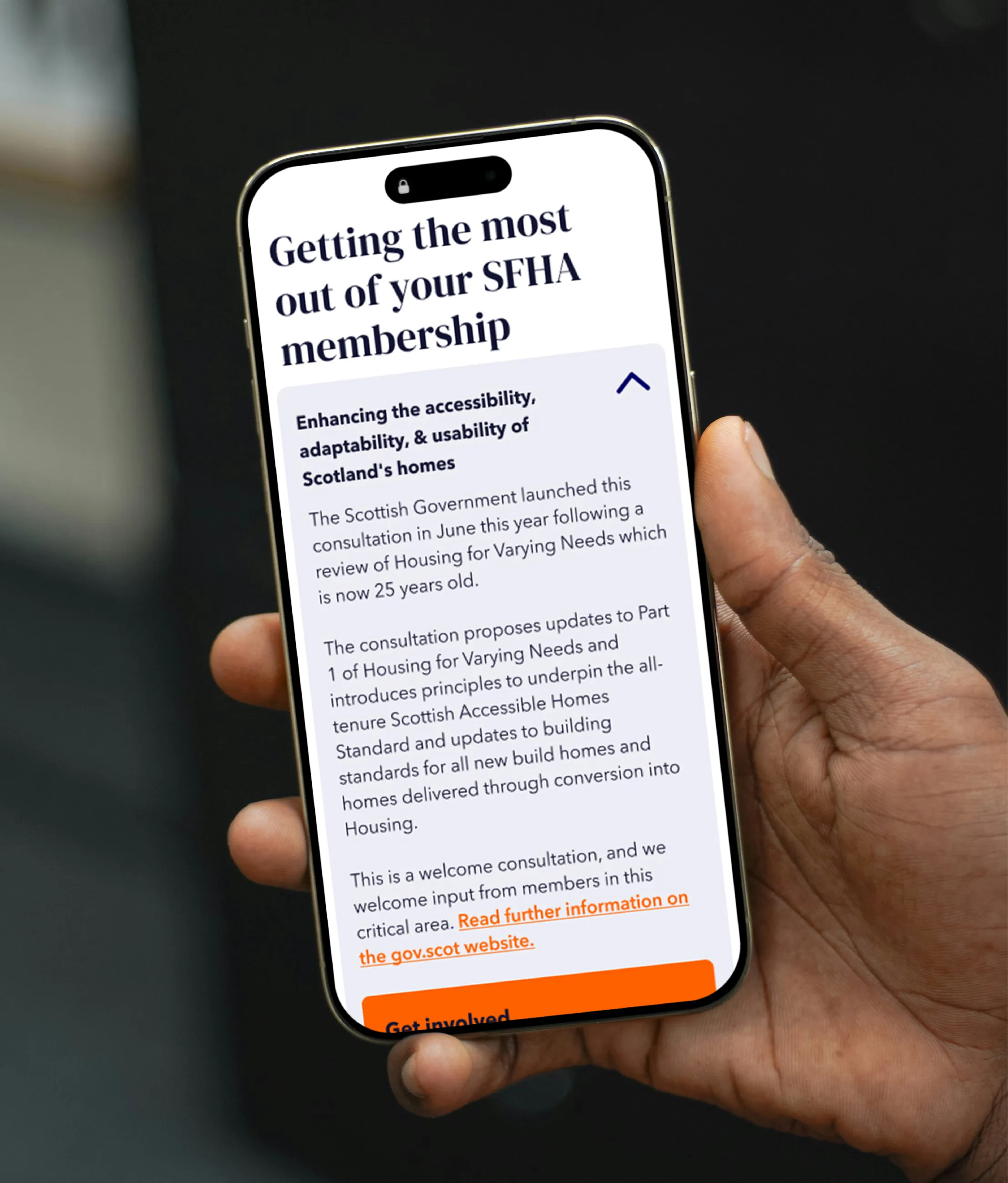
A personalised member dashboard where members could specify their role and interests, accessing all relevant content in one place. This would include their feed of news, events, resources, and discussions based on their preferences.
Digital forums for peer-to-peer discussion allowing conversations from quarterly forums to continue online, and enabling members to share experiences across the sector.
Improved events and booking experience with a complete revamp of the journey from browsing to booking, with pre-populated details for logged-in members and clearer categorisation by audience and topic.
Cross-fertilisation of content using a sophisticated taxonomy system so that members reading an article would be shown related resources, upcoming events, and forum discussions on the same topic.
Enhanced search functionality with autocomplete and the ability to filter by multiple criteria including content type, topic, audience and date.
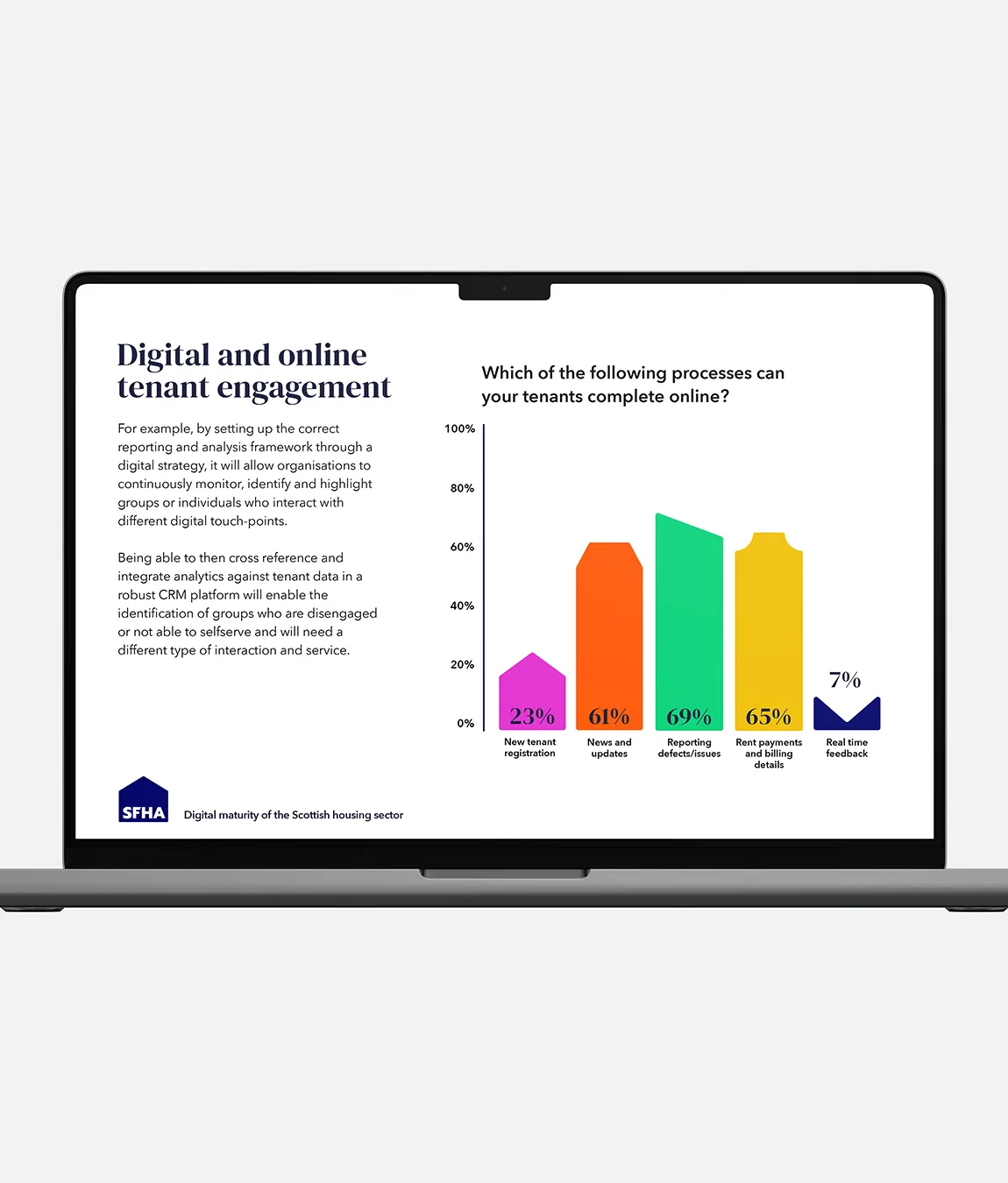
Interactive tools and calculators to help members with tasks like treasury management, digital maturity assessments, and rent setting, building on SFHA's history of creating valuable digital resources.
We also recognised the need for the website to better tell the story of SFHA's impact and the wider social housing sector – not just serving existing members but attracting new ones and demonstrating value to external stakeholders.
Video file
Image

Image
Deliver
Building a platform for collaboration
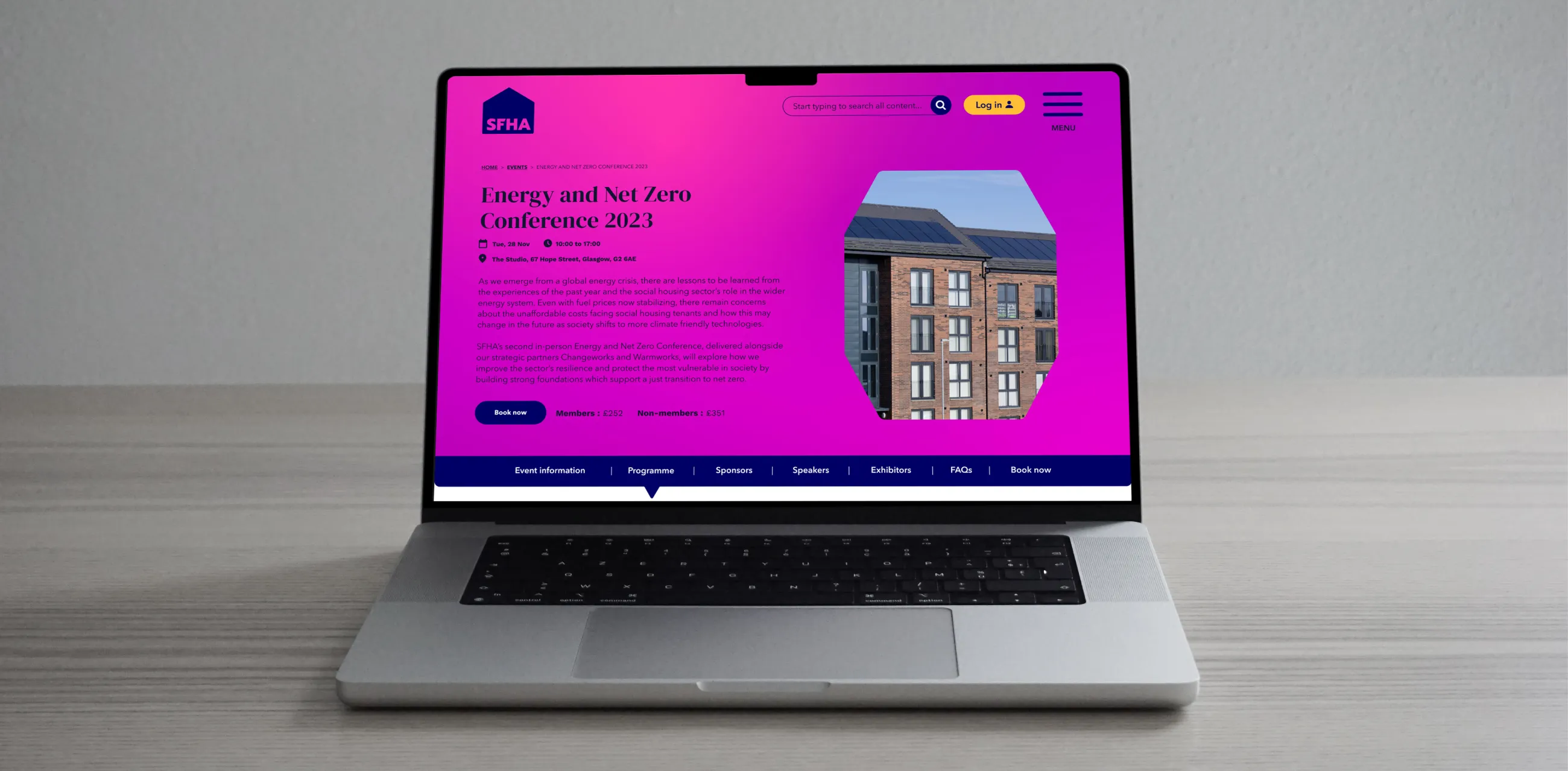
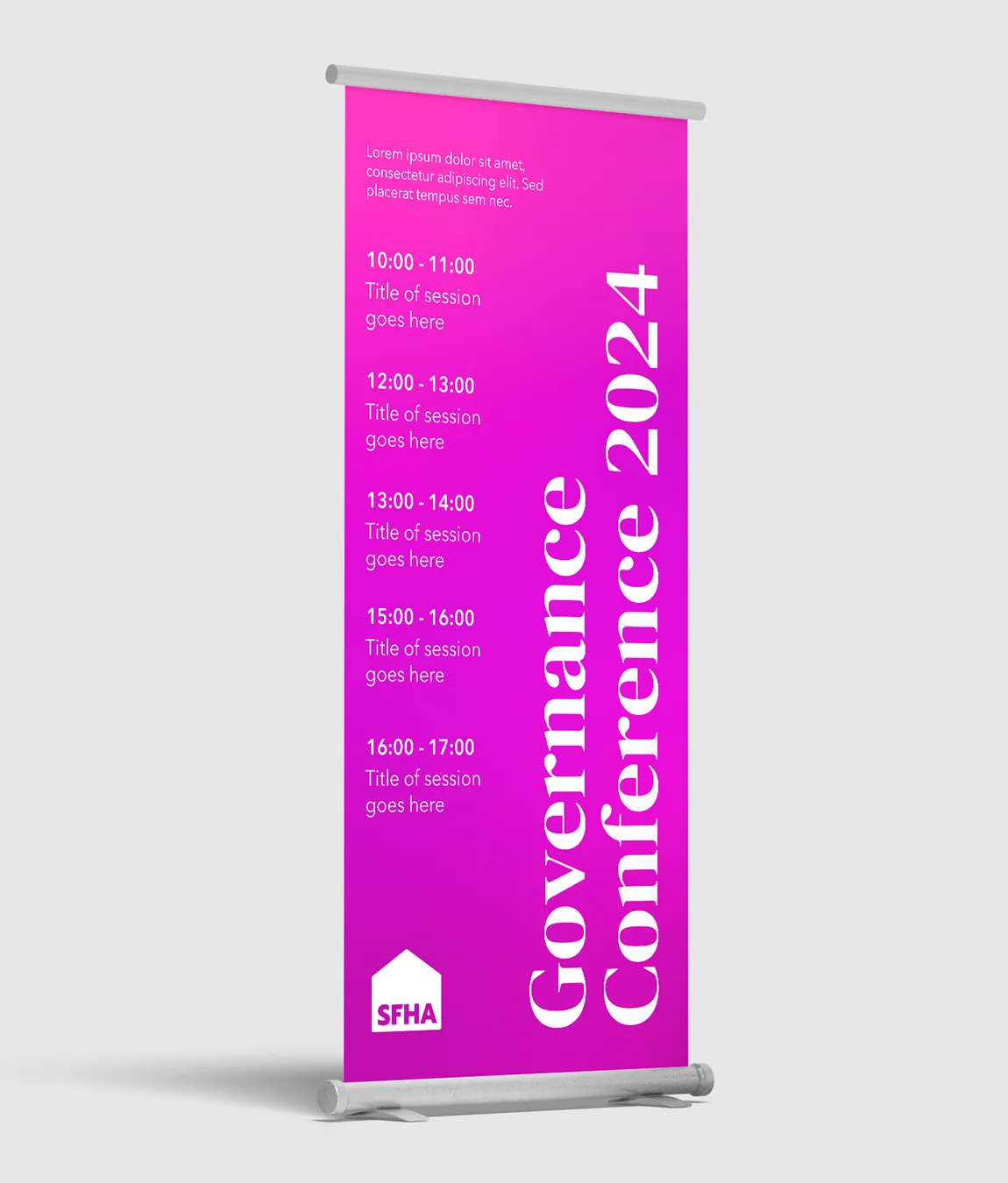
With user journeys and information architecture approved, IE's design team translated SFHA's brand identity into a fresh digital experience. Working in Figma, we created interactive prototypes showcasing key page templates, navigation patterns, and complete user journeys.
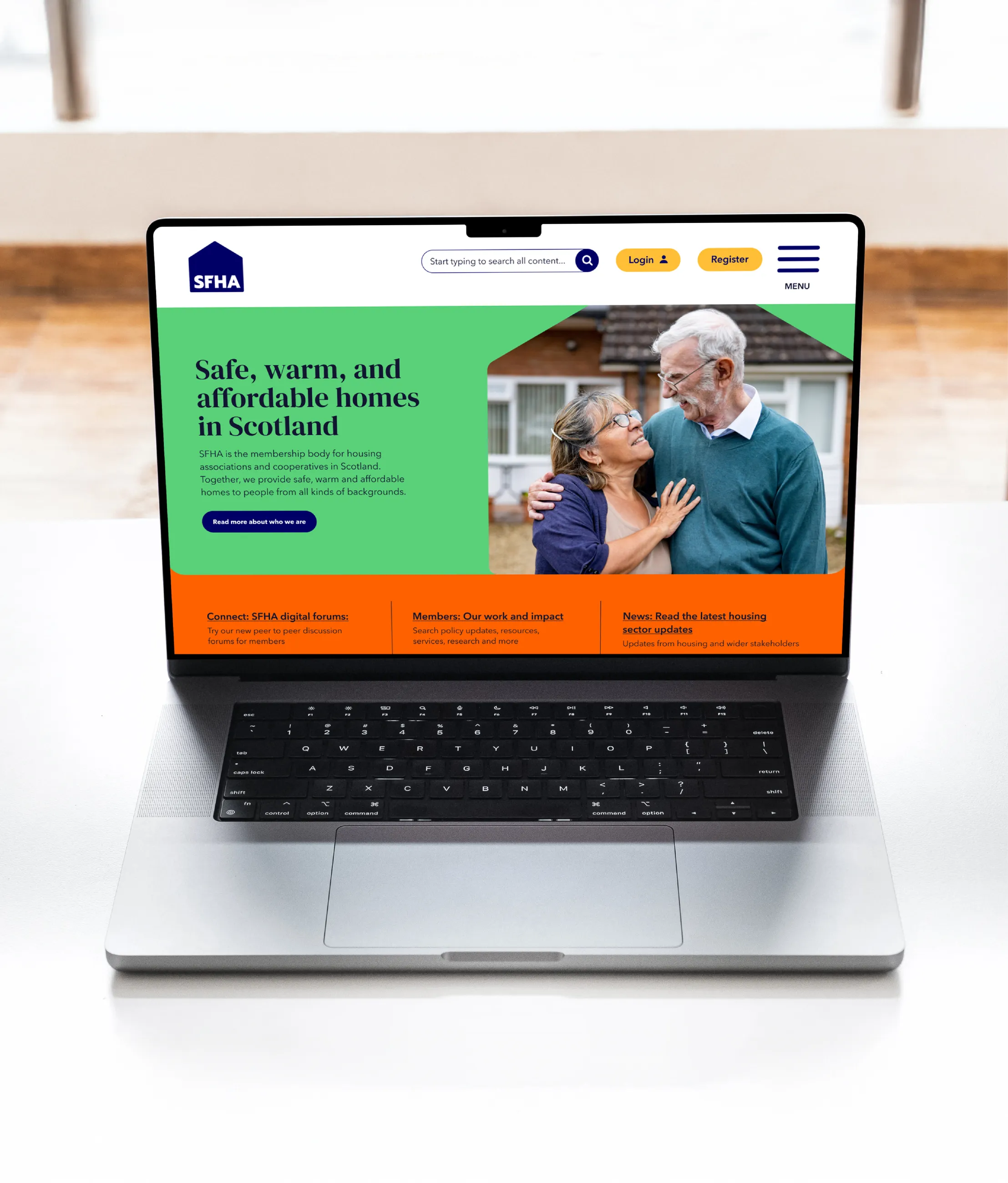
The visual design brought warmth and professionalism to the brand:
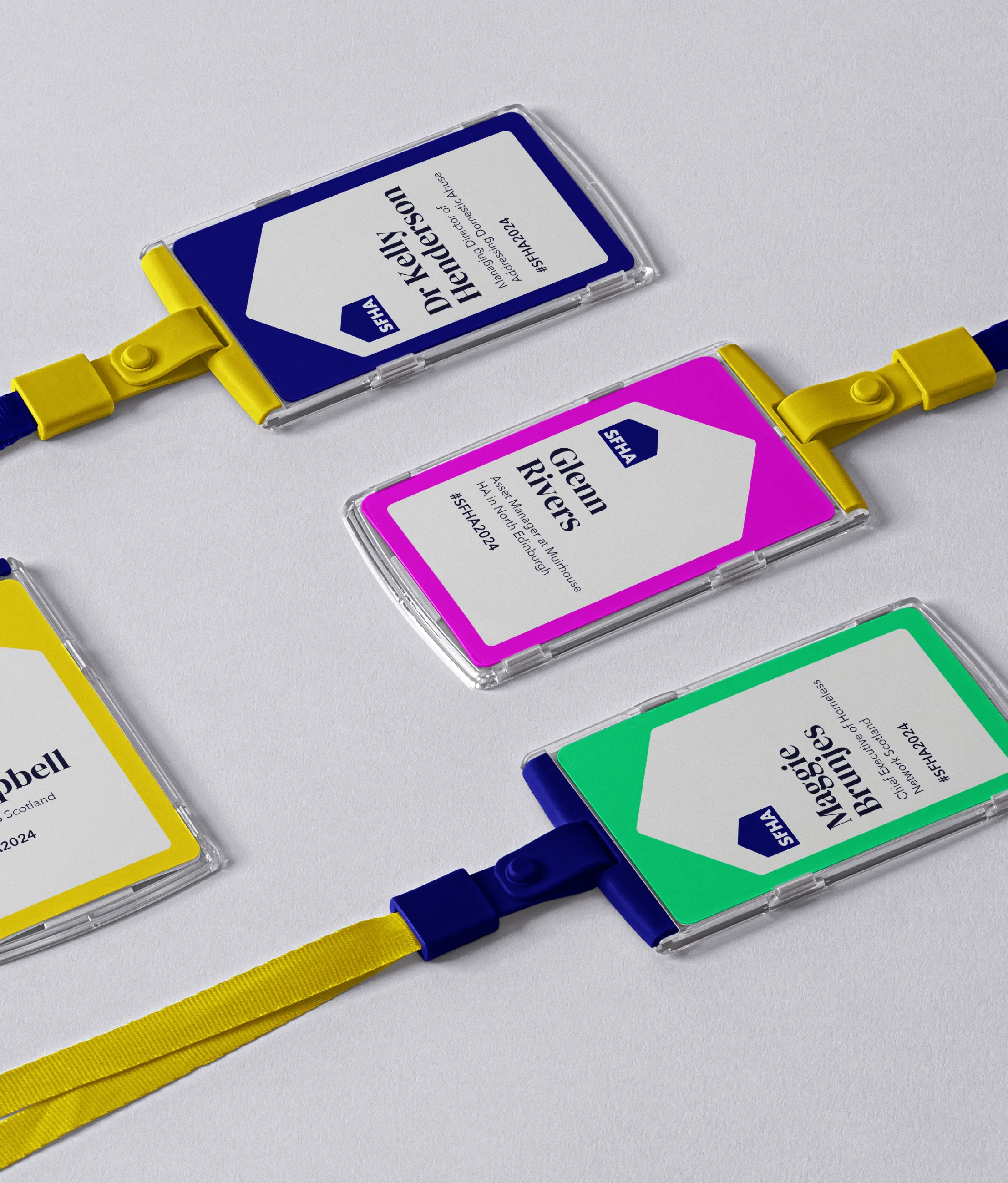
- SFHA's distinctive yellow and blue colour palette, used thoughtfully to create clear hierarchy without overwhelming users
- Real photography of housing association members, tenants, and communities across Scotland
- Clean, accessible typography with excellent readability across devices
- Strategic use of white space to reduce cognitive load and make content more digestible
- Consistent component library ensuring every page felt part of a cohesive whole
IE's development team built the site on Drupal 10, chosen for its enterprise-grade security, robust content management capabilities, and flexibility for complex membership features. The build included:
Custom content types and taxonomies for news, events, forums, resources, policy updates, and case studies. The global taxonomy system allowed content to be tagged by audience, topic, area of work, and type – enabling sophisticated filtering, search, and automated content recommendations.
Salesforce integration via API to authenticate logged-in users, sync member data, and provide personalised experiences based on membership level and interests.
FormAssembly integration for secure data capture on membership applications, event registrations, and contact forms, with data flowing directly into Salesforce.
Stripe payment processing for membership fees, event bookings, and donations, with PCI-compliant handling and automated confirmations.
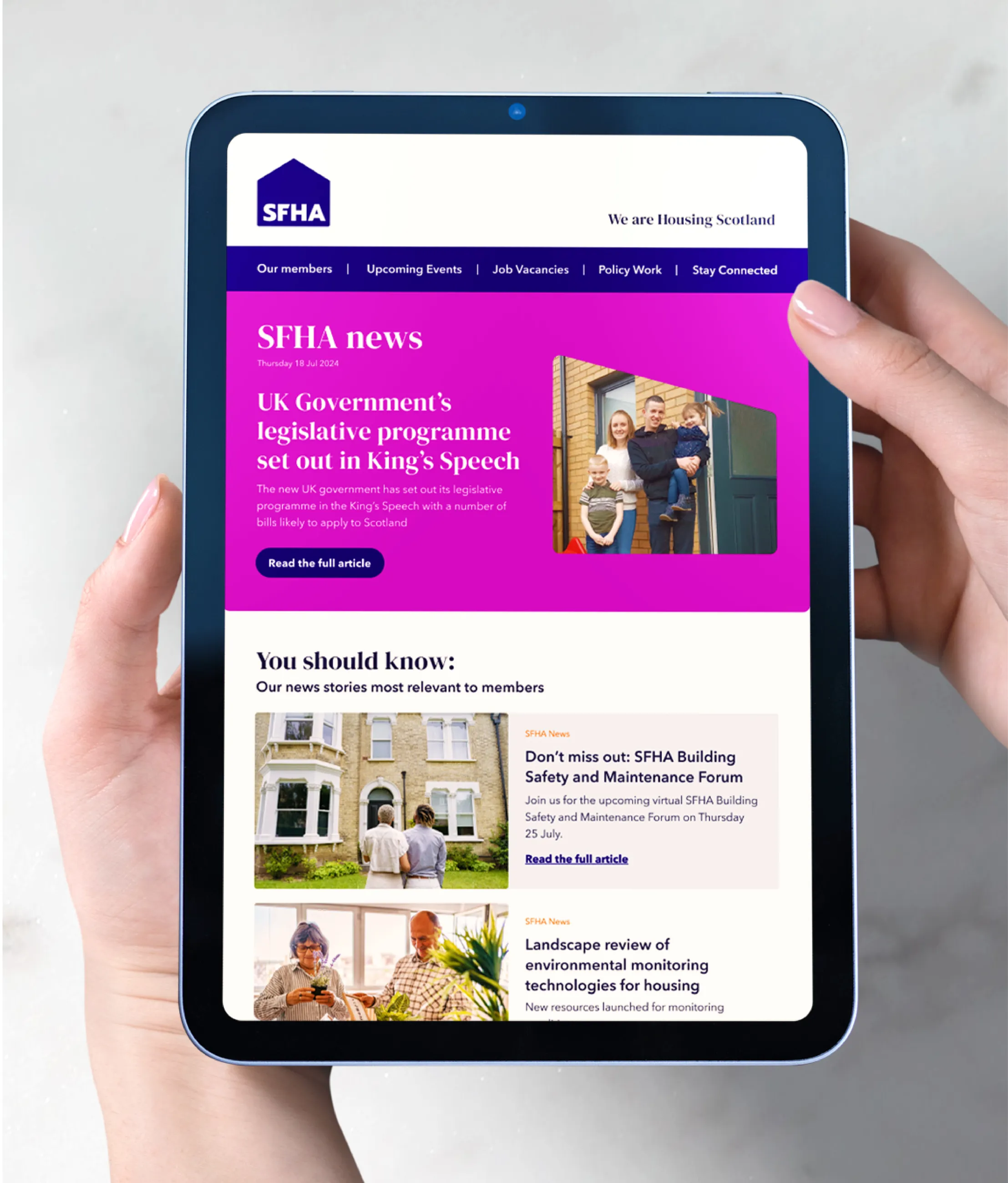
Member dashboard and personalisation allowing members to curate their own content feed by selecting topics and content types of interest, with the ability to receive weekly digest emails.
Digital forums platform providing dedicated spaces for each forum group, where members could start new discussions, continue conversations from in-person meetings, and share resources with peers.
Site-wide commenting and discussion giving members the ability to add their thoughts and experiences to any piece of content, fostering knowledge sharing across the membership.
Enhanced events booking with a complete rebuild of the system, eliminating the need to re-enter details and providing clear event categorisation, capacity management, and automated confirmations.
Interactive tools framework using a combination of Drupal and Stonly (a third-party tool) to create decision trees, calculators, and guided journeys that help members with complex tasks.
Advanced search with autocomplete suggestions, and multi-faceted filtering by audience, topic, content type, and date.
Full responsive design ensuring excellent experiences across desktop, tablet, and mobile, recognising that many members access the site on the go.
Accessibility compliance throughout, meeting WCAG 2.1 Level A standards with clear colour contrast, keyboard navigation, screen reader support, and alternative text for all images.
Throughout the development phase, IE coordinated closely with SFHA's team and their Salesforce partner to ensure seamless integration between systems. We migrated thousands of articles, events, and resources from the old site, setting up redirects to maintain SEO value and ensure members could still find bookmarked content.
Image
Image

Image

Image
Support
Launch and growth
Before launch, IE provided comprehensive training to SFHA staff on managing the Drupal CMS. We covered content creation and editing, event management, forum moderation, member management, and using the taxonomy system effectively. We also trained the team on Google Analytics 4 to help them understand and improve website performance over time.
We set up a thorough testing process, working with SFHA staff and trustees to identify and resolve issues before going live. This included cross-browser testing, accessibility audits, and end-to-end testing of critical user journeys like membership application and event booking.
The website launched successfully in October 2023, representing a fundamental shift in how SFHA connects with its members. The launch included migration of all historical content with proper redirects, DNS cutover with minimal downtime, and post-launch monitoring to quickly address any issues.
The impact was immediate and measurable:
Members could actually find things. The improved navigation, search, and cross-linking meant members spent less time hunting for resources and more time engaging with content.
The booking process worked. Members logged in once and could book multiple events without re-entering details, leading to increased event registrations and fewer support requests.
Forums came to life. The dedicated digital spaces allowed conversations to continue beyond quarterly meetings, with members actively sharing experiences and asking questions.
The site looked professional. The refined design better reflected SFHA's position as the authoritative voice for Scotland's housing associations, with real imagery that celebrated the sector's impact.
Staff had confidence. SFHA's team found the Drupal CMS intuitive and powerful, allowing them to create rich content, manage events efficiently, and respond quickly to members' needs.
IE continues to support SFHA with ongoing maintenance, enhancements, and strategic advice. We've helped them refine the member dashboard based on usage patterns, developed additional interactive tools, and ensured the site continues to evolve as SFHA's membership and services grow.
The new website has become the digital foundation for SFHA's mission to represent, support, and connect Scotland's housing associations – enabling collaboration, sharing knowledge, and ultimately helping ensure everyone in Scotland has access to a safe, warm, affordable home.
Image
Image
Image